Synopsis
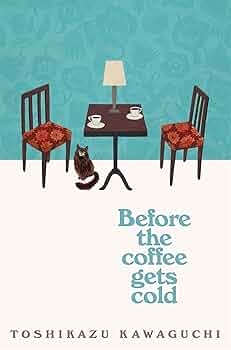
The book is set in a small cafe called Funiculi Funicula in a Tokyo back alley which has been serving freshly brewed coffee for over a century. But the unassuming cafe serves far more than coffee – it offers its customers a chance to travel back in time, with the impediment of several strict rules.
Before the Coffee Gets Cold is a tale of four journeys into the past, each equally moving and emotional.
My Rating: 4/5
Initial Impression
I picked this book up to get a respite from the slightly heavier literature I had been reading – and the plot seemed light enough for a quick read. What immediately caught my attention in the first few pages itself was the simplistic style of writing – carrying the charm that Japanese novels tend to employ.
I’m glad to say that I was not disappointed by the novel. It had everything I’d hoped for: a poignant, undemanding read, though it was more emotional than I anticipated, which was a pleasant surprise.
The Four Stories
The novel was divided into four individual stories (with recurring characters, of course) – The Lovers, Husband and Wife, The Sisters, and Mother and Child.
I found all stories to have deeply resonant philosophical themes, and filled to the brim with introspective narration. While I understand certain criticism for the fourth tale (see details below), I believe that every decision taken by the characters were deliberate and very heavily nuanced, brewed carefully over the course of the story.
SPOILER ALERT: More details on the fourth story (click to read)
Kei, a central protagonist throughout the story, is revealed to have a heart disease which is almost certainly fatal during her pregnancy. Her husband, Nagare, is torn between his desire for her to live and her determination to carry the child to term despite the danger.
After travelling back to the past to meet her unborn daughter, Kei is shown to find solace from their fleeting interaction and is assured that she must make this sacrifice.
Readers have criticized Kawaguchi’s portrayal of Kei and her decision, some even saying that he used the entire novel as a cover for his “pro-life” views.
While I agree that this decision may seem unrealistic or imprudent, one must understand that:
- Kei’s decision is portrayed as hers alone – at no point in the story does Kawaguchi suggest that this is the “right” choice for all women, or that it ought to be universally applied.
- The narrative never opts for a didactic tone or celebrate her sacrifice as heroic – nor does it condemn the alternative.
- The encounter with her daughter makes Kei’s decision much more difficult – rather than an abstract future, she meets her child in flesh and blood, living a normal, healthy life. The child she will never meet in her present life is no longer hypothetical; she exists as a real, complete person. This only solidifies her resolute choice to save her child.
Criticism aside, I honestly loved the book and found it very original. The simple, prosaic writing style and slow plot may not be everyone’s cup of coffee – but it’s a great read for slowing down and relaxing.
Happy reading!
Yours truly,
Divi

Leave a comment