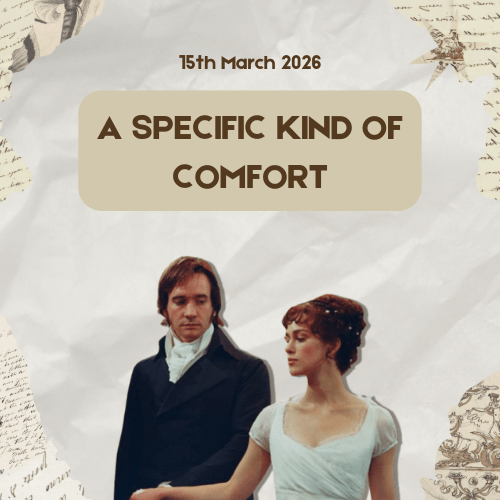


Morning fog. A lingering walk, hem trailing through dew-moistened grass. Soft piano notes echoing in the background, marking the indelible theme – Dawn by Dario Marianelli and Jean-Yves Thibaudet.
The beginning of Pride & Prejudice unravels slowly. This is a movie that I could tirelessly watch a hundred times over – from the tactlessness of Mr. Collins (“What excellent boiled potatoes!”) to the iconic hand-flex scene in the carriage, this movie has a gradual, comforting quality.
The Appeal of the Familiar
And as someone who has read the book countless times as well, the predictability of the ending feels deeply reassuring – knowing that no matter how angrily Lizzie and Darcy parted after the confession in the rain, they will inevitably return to each other. That they will abandon their stubbornness and meet in the misty fields of Derbyshire once more.
The Music
The consistent piano score in the background makes it impossible not to relax into it, creating a world that feels suspended in time.
Pride & Prejudice is a phenomenal example of the use of diegetic music.
Diegetic music: When characters in a film or show can hear the background score.
In this case, characters are often found playing the music at social gatherings or dancing to compositions at balls. The movie blends non-diegetic and diegetic music.
The Colour Scheme
The saturated, romantic colour grading of the movie feels very homely, and coupled with the muted, earthy tones of Hertfordshire and Derbyshire, makes the setting feel warm and lived-in.
Throughout the film, characters are bathed in soft golden light (sunrises, candlelit interiors, foggy mornings). It gives the entire story an almost nostalgic feeling.
In the end, the appeal of the film isn’t just in the romance or the atmosphere. All of these small elements add up, making the film memorable and soothing.
(Besides, any film capable of making an entire generation emotionally invested in a single hand flex deserves its place as a comfort watch.)
Yours truly,
Divi

Leave a comment