Very few novels can alternate between timelines while honoring the original plot of the story. The Winemaker’s Wife by Kristin Harmel is one of them.
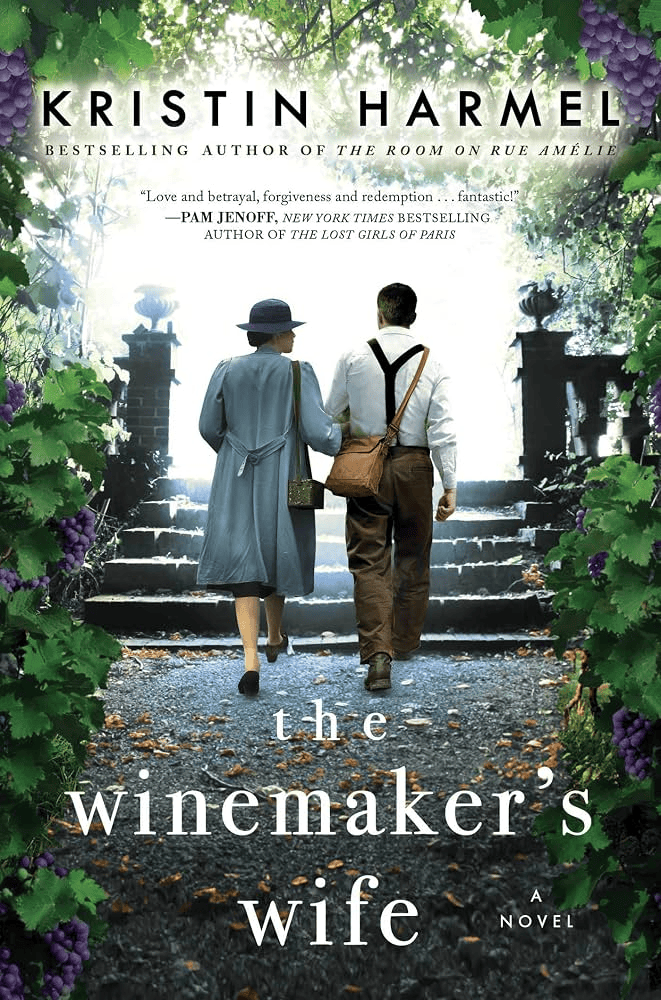
Published Synopsis
“When new bride Inès sweeps through the doors of the famous champagne house, Maison Chauveau, she has dreams of building a dynasty. But the husband she married is not the man she imagined.
Troubles at home seem small and petty as Nazi soldiers march across occupied France. But even in the face of great horrors, it is the little choices on which life turns, and it only takes one wrong move to bring her world crashing down.
Almost eighty years later, Liv Kent arrives at the doors of the Maison Chauveau, and the past and the present collide. Can the truth of what happens ever be known? Or are some secrets better left buried?”
Review
My rating
This book discusses a sui generis angle of Nazi rule that is seldom talked about: the role of French winemakers and champagne houses in outwitting, sabotaging, and resisting the Nazis. It blends fictional characters with a setting and scenario that was very much real: the four-year Nazi invasion of Reims, Champagne in France.
Overall, I enjoyed the novel, and the ending tied both timelines of 1940 and 1919 together beautifully. Personally, I feel like there was a lot of untapped potential in the plot. The author delved deeply into the personal and romantic lives of the main characters, which, of course, is a personal choice, but I would have loved to see more elaboration on the secret network of spies and resistance in the town itself.
What Worked (Warning: Contains Spoilers)
The mystery of the connection between Grandma Edith in the present timeline and the resistance timeline of 1914 in Reims was beautifully written, and the bittersweet ending definitely saved the book.
The big reveal that Grandma Edith was really Inès was my favourite part of the novel. It felt well-baked, and the buildup was just long enough. After reading a few reviews, I heard a lot about how it was “predictable”, but I personally didn’t find it at all obvious.
I also found Inès’ redemption and character development quite well written.
Her protecting David (Michel and Céline’s child), joining the French Resistance, and spending her entire life raising the child safely under Edith’s name – all of these showed a clear character arc.
What Didn’t Work (Warning: Contains Spoilers)
- The characters. Out of the four main characters (Inès, Michel, Theo, and Céline), I didn’t find a single one compelling. Inès was too whiny and querulous, and combined with her cheating on her husband and getting him killed and Céline caught, her character was not at all lovable. Michel and Céline, though comparatively less 2D, also cheated on their partners and weren’t captivating or relatable. As for Theo, he was possibly the worst of them all – uninteresting, dry, and added no value to the plot. If he was a spice, he’d be flour.
This may come off as a little too harsh; however, I did enjoy Grandma Edith’s (future Inès) character and thought she was well layered (although a little obnoxious with her vagueness with Liv). - Everyone’s carelessness. Since Céline was half-Jew, I expected her to be more vigilant and less… impetuous. I found it a little unrealistic for her to be embarking on an affair with her boss, putting her only safe haven at stake. Of course, people don’t always make rational decisions under these circumstances, but I wish the motivation had been more convincing.
- The romance overshadowing the historical narrative. The relationships did not develop convincingly, and they were used more as a convenient explanation for the characters’ behavior. Liv’s romance also felt somewhat detached and unrelatable, almost like an entirely separate story.
Ultimately, The Winemaker’s Wife has left me with a peculiar aftertaste of an interesting premise, a (mostly) satisfying ending, but characters I wouldn’t care to have a glass of champagne with. It’s a three-star read for me; a lot of potential, and an enjoyable book, but one that left me wishing that the story had been as compelling as the history behind it.
Yours truly,
Divi

Leave a Reply