Hey guys!
Today, I want to talk about a topic that hundreds of other people on the internet have already brought to attention – how certain media applications (*cough* Instagram and TikTok *cough*) have ruined literature. From Rupi Kaur and Atticus’s contentious poetry to the “bookish” side of TikTok, the quality of written compositions seems to have significantly deteriorated.
But before we delve into trends and individual personalities, let’s discuss: what makes poetry, poetry?
One of the most widely accepted definitions of this ambiguous term is – “Poetry is the literary work in which special intensity is given to the expression of feelings and ideas by the use of distinctive style and rhythm.” Here, two terms in particular catch the eye – “expression of feelings” and “rhythm”. The latter implies that poetry must have a basic metrical pattern, or at the very least, must accentuate the musical aspects of language.
Meanwhile, William Wordsworth took a more romantic approach (I love you if you caught the Romanticism joke). He expresses poetry as “the spontaneous overflow of powerful feelings”. Though this equivocal definition is somewhat vague, it certainly makes room for the modern-day poets to make an appearance.
[Enter RUPI KAUR and ATTICUS.]
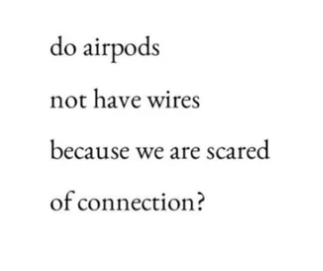
Feast your eyes on this poem by Rupi Kaur, a modern day poet:
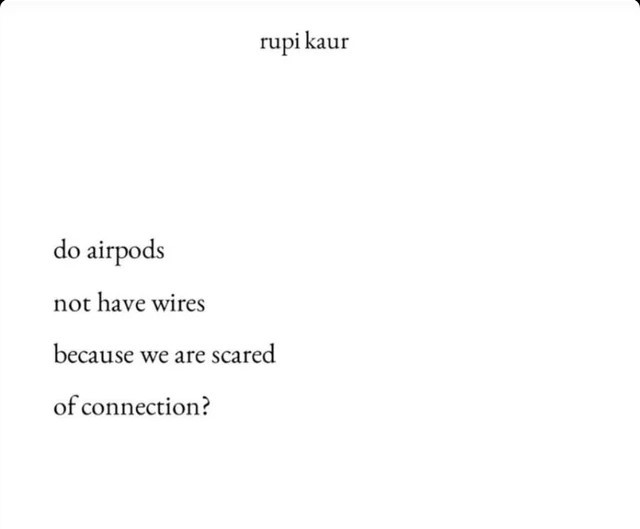
Now, if you’re even a little bit acquainted with poetry, you’ll probably find this ludicrous. Is this single sentence with line breaks supposed to qualify as a poem? I would firstly like to clarify that I have nothing against writing such compositions, but rather against passing them off as poetry.
I will admit, though, that this is one of the more controversial pieces by Kaur. She arguably has many well-written and thought-through pieces, and while infamous to an extent, is a heavily lauded poet whose 2014 released book ‘Milk and Honey’ has sold 11 million copies and has been translated into 43 languages. You’ve also certainly got to praise her for having the guts to speak up on topics such as abuse, trauma, sexuality, and violence. It’s great that these topics are being spoken about liberally.
An example of one of her deeper works, also pointed out by the channel Roughest Drafts on YouTube, is:
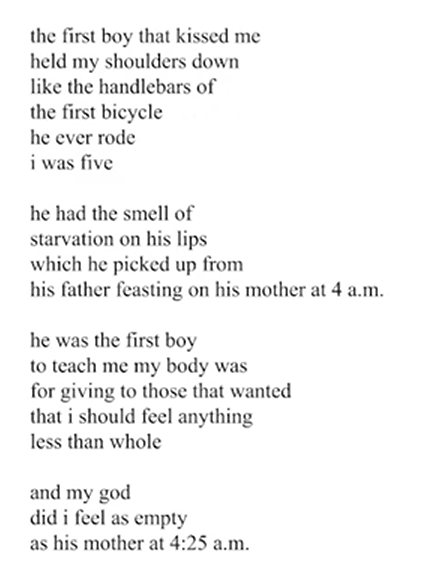
This poem in particular seems to evoke the emotional response as is expected with poetry. It addresses the trauma of rape and sexual abuse faced by women around the world in a profound, albeit simple, way.
And while we’re on this topic, I’d like to shift the focus a bit to Atticus – the pseudonym of an anonymous Canadian poet with 1.6 million followers on Instagram and 3 published novels (collections of his poetry). He’s known for his ‘aesthetic’, moody black-and-white posts on Instagram, poetic one-liners, and resolution to keep his face hidden.
Mysterious? Certainly. Meaningful? That’s up for debate.
Now, like I did earlier, I want to start with one of his more contentious works:
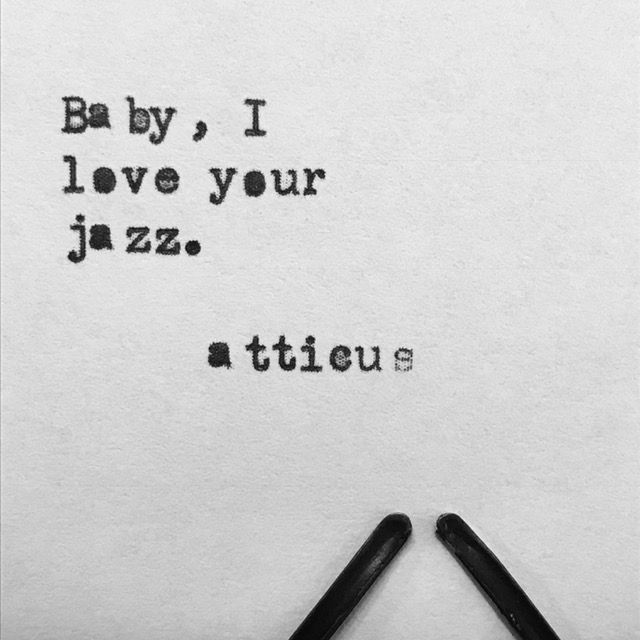
Please tell me I’m not the only one who finds this… well, not poetry. The intentions of such a poem are clear – it seems to be made purely for ‘deep’ social media posts that are written and consumed within one fleeting moment. I feel that this particular piece hardly qualifies as a quote, let alone a poem. That being said, though, I do not in any way mean to discredit Atticus or his poetry.
Here is an example of one of his slightly heavier poems:
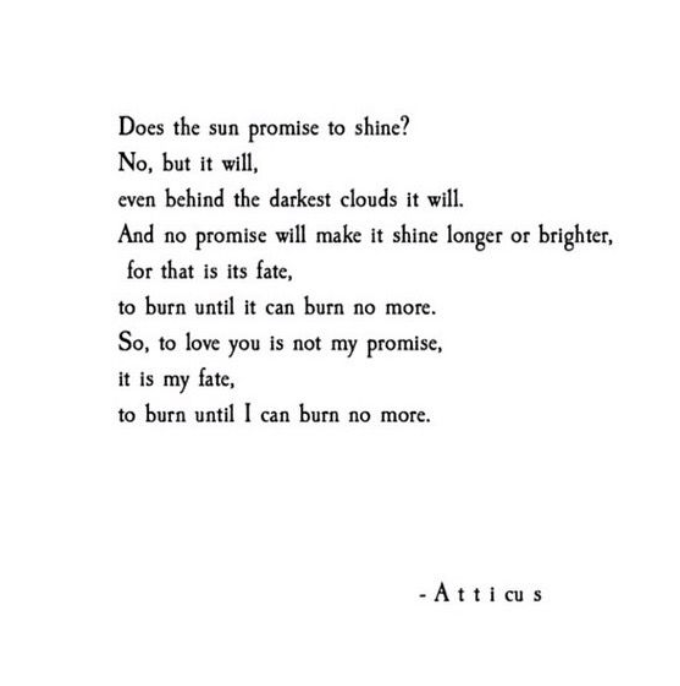
The poem utilises personification and relatively deeper themes of love and loyalty. Unlike his more surface-level pieces, this one plays with metaphor, tone, and structure in a way that elicits a more intense reaction than a like on Instagram.
I would like to use this poem as a paragon of what modern-day Instapoetry can be instead of just a caption on a social media platform.
I also want to clarify once again that even though I sound like an irate literature professor, I am not here to slander the poets mentioned above in my post or to tell people what not to like. If one-liner poems stir emotion in the reader, then by all means, continue condoning such literature. But let’s not confuse virality with value.
This post might have been much longer if I had a lot of actual content to analyse in the poems – but maybe the length says it all…
I’ll sign off with that. Happy reading to all of you!
Yours truly,
Divi

Leave a comment