“Quiet as it’s kept, there were no marigolds in the fall of 1941. We thought, at the time, that it was because Pecola was having her father’s baby that the marigolds did not grow. A little examination and much less melancholy would have proved to us that our seeds were not the only ones that didn’t sprout; nobody’s did…It had never occurred to either of us that the earth itself might have been unyielding. We had dropped our seeds in our own little plot of black dirt just as Pecola’s father had dropped his seeds into his own plot of black dirt. Our innocence and faith were no more productive than his lust or despair.“
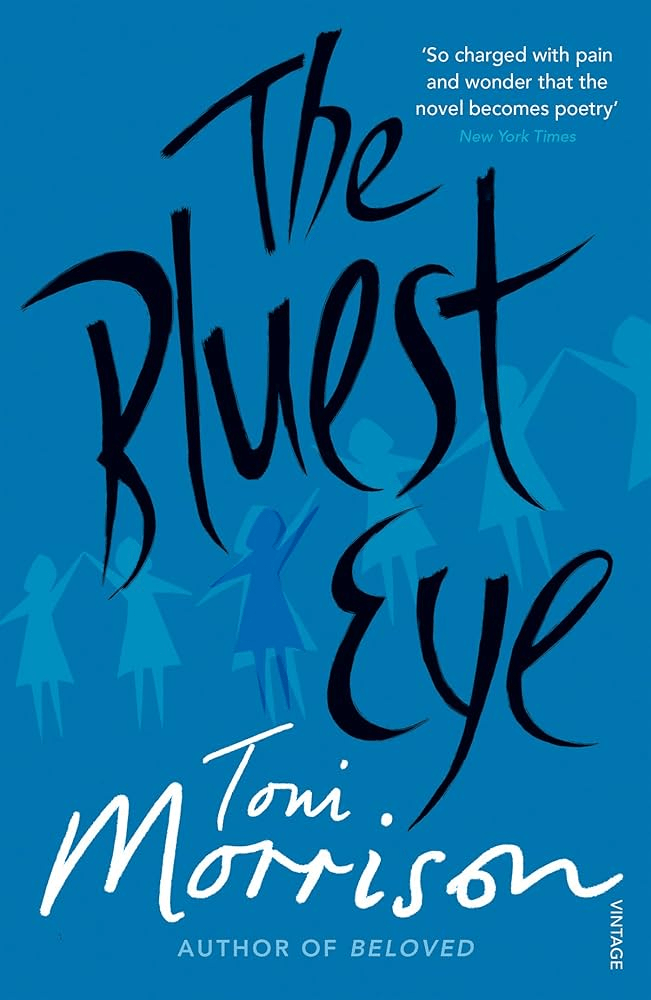
This novel has occupied a permanent corner of my mind ever since I flipped open the first page, diving into the heart-wrenching and visceral prose of Toni Morrison.
The Bluest Eye describes the tragic, harrowing life of Pecola Breedlove, a young Black girl in 1940s Ohio, who is convinced of her ugliness – but this description feels far too neat for the novel, almost a way to palliate the true depth of Morrison’s writing.
What makes the story so heart-wrenching?
The story is narrated through multiple alternating perspectives – allowing us to see how Pecola is perceived, and dismissed, by the people around her. Morrison doesn’t just tell us that Pecola believes she is ugly; she shows us how that belief is constructed, piece by piece.
While reading The Bluest Eye, I found it impossible to tear my eyes away from the near-lyrical prose. The use of different narrators exposes just how strong the impact of racial prejudices and poverty is on families.
The “Helplessness Factor”
Watching an ignorant society turn a blind eye to the abuse and hatred in the novel creates a kind of helpless urgency – wanting to do something, anything, to help the character. But you can’t. So you’re forced to sit there, perusing the pages, observing the duality of a character’s innocence and the torment they must endure.
The use of contrast
Toni Morrison masterfully uses contrast: utilizing poetic language to describe experiences that are anything but, and juxtaposing a character’s naivety with the indifference of the people around her.
My Rating
Nothing about this novel feels distant, and that’s exactly what makes it unbearable.
“Love is never any better than the lover. Wicked people love wickedly, violent people love violently, weak people love weakly, stupid people love stupidly, but the love of a free man is never safe. There is no gift for the beloved. The lover alone possesses his gift of love. The loved one is shorn, neutralized, frozen in the glare of the lover’s inward eye.”


Leave a comment